Bridging Science and Clinical Insight:
Translational Research in Cardiovascular Immunology
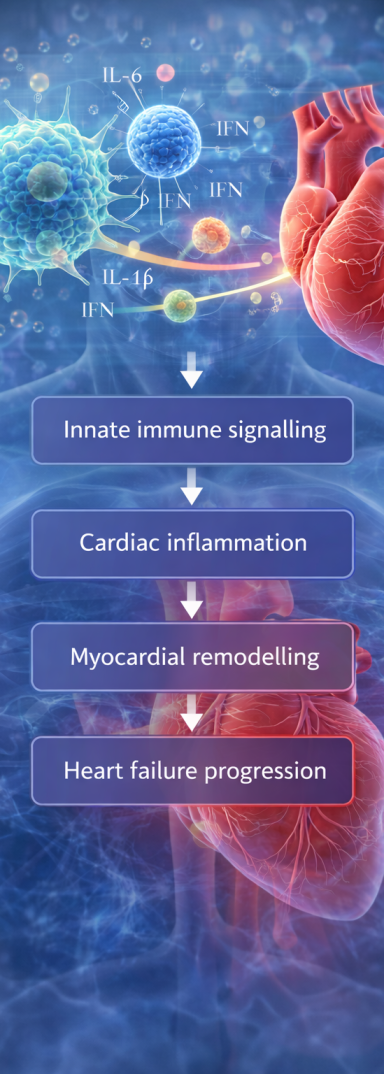
Cardiovascular disease is increasingly recognised as an immune-driven condition. My research focuses on understanding how innate immune signalling contributes to cardiac injury, inflammation, and myocardial remodelling following myocardial infarction.
A central focus of my work is the cGAS–STING signalling pathway and its role in inflammatory activation within the heart. I investigate how innate immune responses shape the transition from acute cardiac injury to chronic inflammatory remodelling.
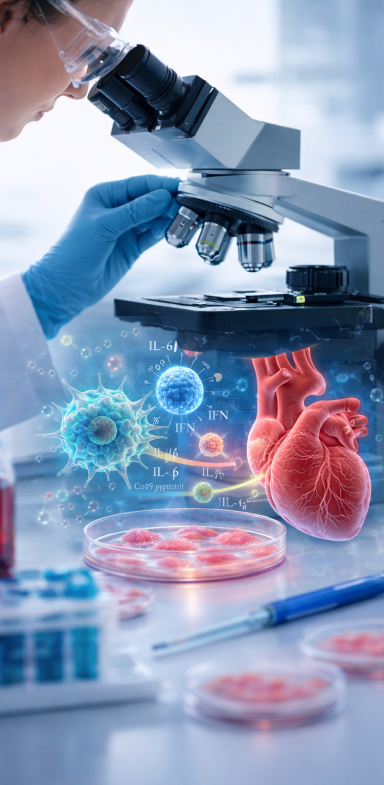
This work examines the interactions between immune cells, cardiomyocytes, and cardiac fibroblasts that drive structural and functional changes of the myocardium. By studying these mechanisms, my research aims to identify key pathways linking inflammation to adverse cardiac remodelling and heart failure progression.
Through mechanistic and translational approaches, this research seeks to improve our understanding of immune-driven cardiovascular disease and to identify potential therapeutic targets that may help modulate inflammatory responses after cardiac injury.
Research Focus
Current Research Directions
Innate immune signalling in cardiovascular disease
cGAS–STING mediated inflammatory activation
Immune-driven myocardial remodelling after infarction
Translational integration of experimental and clinical datasets
Mechanistic role of cGAS–STING signalling in cardiac inflammation
Immune-cell interactions in myocardial remodelling
Translational integration of molecular pathways and clinical biomarkers
Sex-specific inflammatory mechanisms in cardiovascular disease
Methodological Approach
My work integrates experimental cardiovascular models, molecular pathway analysis, and biomarker-informed clinical datasets to identify immune-driven mechanisms of cardiovascular disease progression.